
François Ecot (Burgundy)

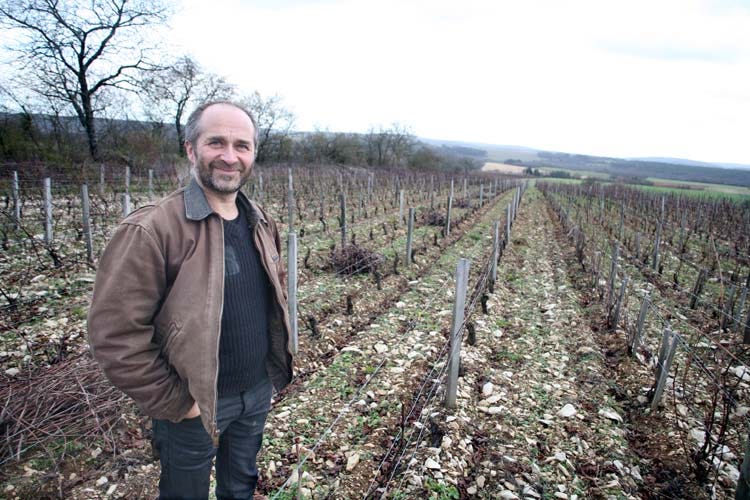
François Ecot
Mailly le Chateau, Yonne (Burgundy)
François Ecot makes wine in eastern Burgundy south of Auxerre and north of Vezelay. The Yonne département is one of these “minor” Burgundy regions that you must watch closely as a few inspired vintners have been doing a lot to prop up the quality of the wines, often through just hard work in a cluster of parcels that they purchased or replanted. This area was also a vibrant wine region in a former life, say a century or a century and a half ago. François has old family roots in the area, he now by the way lives in his grandfather’s house in Mailly-le-Chateau, but he came back to his wine roots through an indirect landing : François is the French half of François & Jenny, a transatlantic wine import business which is dedicated to artisan wines made the most natural way from healthy vines and soils.
He set up his small winery in parallel with the import operation and to this day he keeps managing the company with his former wife Jenny, helping select new vintners in France or Italy.
François had met Jenny Lefcourt (who is from New York) in 1991 when she visited France a few years ago and at that time Francois used to go drink interesting wines here and there in Paris, for example at Le Baratin which was among the first bars/restaurants to offer these types of vivid and often-unsulfured wines which were not yet framed under the term “natural wine”. Life went its course and they got the idea to share these great wines that they had been enjoying in a string of selected venues in Paris and which were not well-known in New York at all (and not even in France by the way).
After a couple of test tries when Jenny visited a few cavistes in New York, François quit his job of accordion tuner and they set up their import business, first with French-only natural wines, then adding wines sourced in Italy, Spain and even more recently in the U.S.A., all these wines being made through a philosophy of truth and artisanship. In short, they imported the wines they loved themselves, wines which were mostly unknown in New York then.
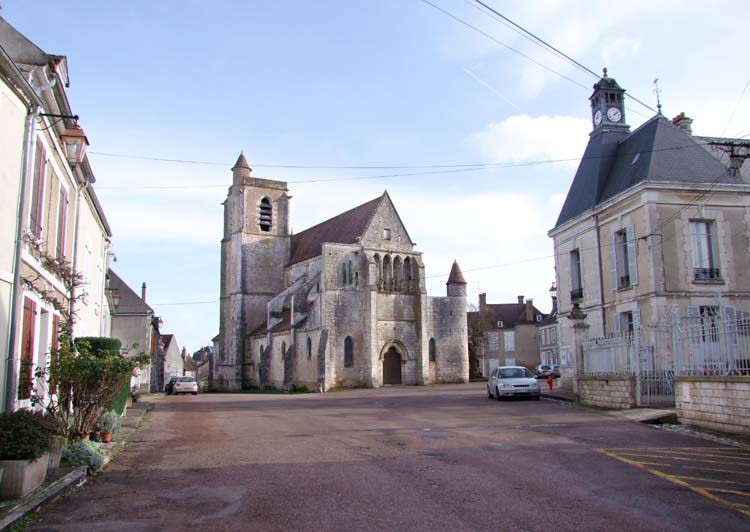
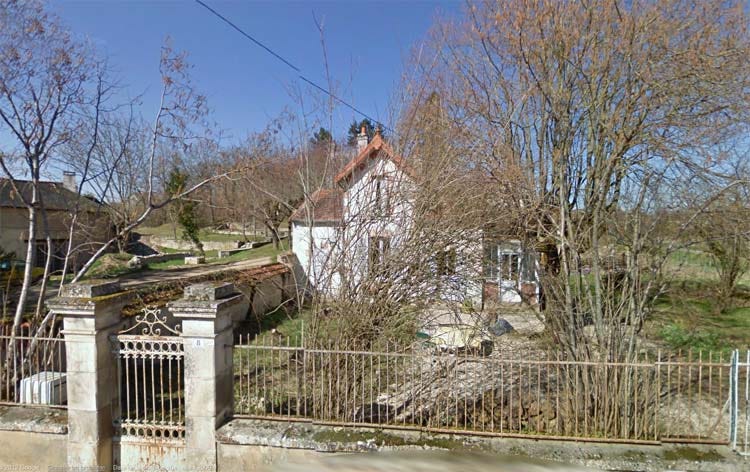
Pic on right : the house (Google street view). On left : the village church and square.
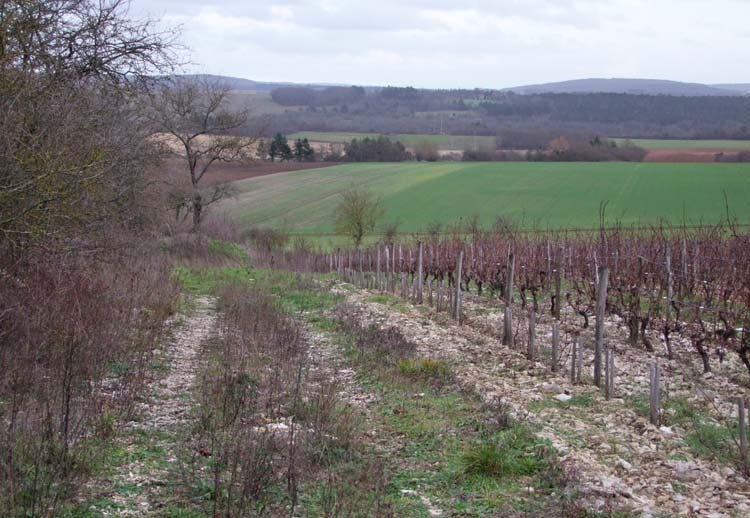
The vineyard along a wooded hedge
Even though the business of wine import helped him know many things related to winemaking, François felt that he nedded to know more about the making of the wine in order to strengthen his expertise and knowledge and be able as well to understand what he was going to select and import. So, he decided to enrol at the wine school in Beaune in 1998 because they had 8-month trainings for adults there. During his training he met friends who tipped him about Jean Maupertuis, Hervé Souhaut, Henri Milan, and he also dicovered the artisan vintners who were taking part to what may be the earliest natural-wine fair in France (and of the world), the Salon des vignerons de Groslay which takes place every year in march in a gymnasium in the small town of Groslay (north of Paris). Between his training and visits at the Groslay fair, he met (and tasted the wines of) many daring vintners who were making wines without intervention and added few, if any, SO2. So, after his training he worked a bit at Thierry Allemand and Hervé Souhaut. At the time the natural wine concept was not yet formalized and you could drink these new wines "au compteur or à la ficelle (you'd pay in proportion of what remains in the bottle) at places like Passavant, rue Goncourt in the 10th in Paris, in addition to Le baratin of course in the 20th.
Picture above : François' resurrected vineyard, which goes down toward the valley along a 260-meter slope.

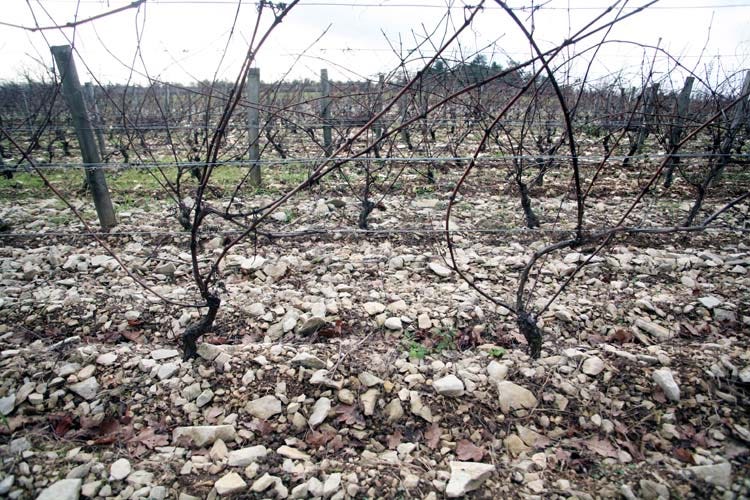
Stony soil
We drove a short distance to one of the parcels od Francois on a gentle stony slope, and he recounted how he set foot back on the grower's life of his ancestors. In 1998 after his training in Beaune, he discovered an old guy who lived in the village behind the cemetary and who had 10 hectares of vineyards which are now alas abandoned. At that time François was getting experienced and he was working and pruning for other growers to help make a living. He kept working like that on the side till 2000, 2001 and 2002 (in particular in Coulanges), in parallel with doing his part on the import business of François & Jenny. So, he proposed to do some pruning for this guy who had 10 hectares near Mailly-le-Chateau, and one day he asked the farmer if he knew about some available parcel in the vicinity. The old guy showed him this place which was now a wasteland with overgrown bushes all over, but this was indeed a former vineyard parcel with great potential, except that then you couldn't see the soil and you just had to visualize the potential of the plot. On the most arid and stony part of the slope, you had much less grass and plants because of the poor soil, that was the sign of struggling conditions for any type of plants growing there.
This plot had been left by itself for 80 years, virtually since the phylloxera wipped out the vineyards there, and he could have the chance to resurrect it to vine growing. Land costs nothing around here, and the market opportunities for a conventionally-made wine here would be close to nil, so François wrote to the owner who accepted to sell this slope easily. After clearing the place from all the bushes and trees, he began to replant. At the beginning he replanted with Pinot Noir, then Pinot Beurrot (or Pinot Gris) which can be used either for whites or reds. He has also some César. Why César ? Because it's local and it has been around for a while, so, he wanted to grow some too. We're walking across this parcel and François knows by heart where all of his rows are, variety per variety, it's like his babies, he planted them and saw them grow side by side, each with their varietal character. When I look at the stone density on some patches of the slope, I understand that they couldn't plant but vines here, except maybe fruit trees (I think François told me that there was an orchard here).
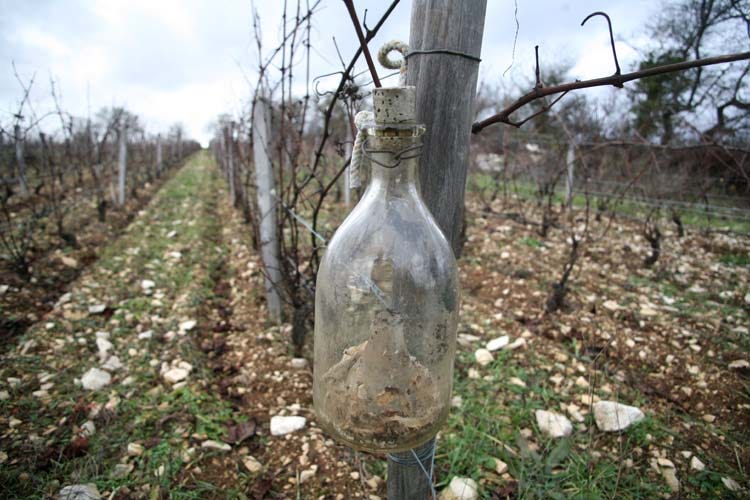
Wasp trap
François Ecot usually puts a bit of Pinot Beurrot in each cuvée but he tries to also make a separate cuvée of it. Pinot Beurrot is from what I understand like Fié Gris (a sort of pink sauvignon), that is, a white variety with a pink skin, which means that it you press it straight, you get a white, and if you put it through some sort of maceration, you end up with a rosé or a light red. François shows us pictures on his cell phone, and as he looks for the Pinot-Beurrot ones, he stumbles on the ones of beautiful clusters of César which are impressively large and well proportionned. The Pinot-Beurrot grapes are more blue than red or black, but François says that on certain years a given cluster of pinot beurrot can have both blue grapes and white grapes depending which side of the cluster you look at. His pinot beurrot vines are massal selections from Dominique Derain (who works further east in Burgundy).
There are also a few vines of Abouriou, a local variety which has a long history around there, it makes dark, César-like, Grolleau-like, Cot-like grapes with peppery notes and with Gamay similarities too. He got the massal selections from Marc Pesnot in the Muscadet, who has a good pool of this variety and even makes a single-variety cuvée from it. François Ecot hasn't much of Labouriou in his rows and he usually puts the grapes atop the vat holding the gamay with the pinot.
Last but not the last, he has some pineau d'aunis which are massal selections from Christian Chaussard in the Coteaux du Loir (Loire).
His pinot noir are alas not massal selections, but clones, and they ripe too early and the wasps tend to make a feast of them because of that.
He also has some Gamay, they are massal selections made by the Fornerot nursery in Saint Aubin.
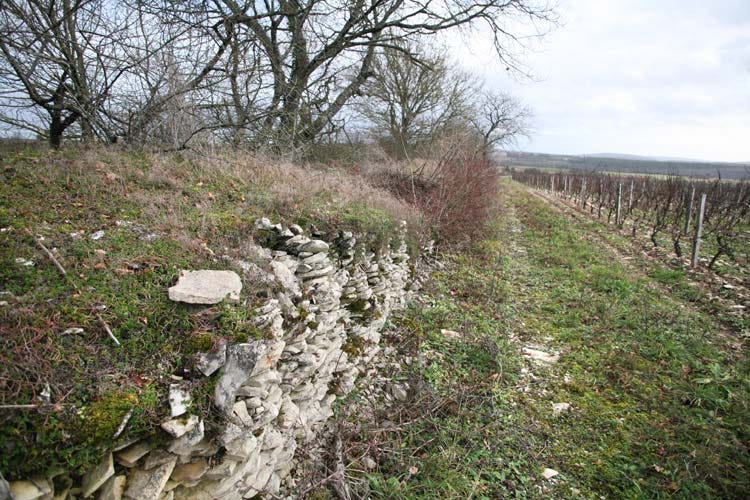
The stone wall along the vineyard
The stone wall along the parcel reminds that the vineyards have been painstakingly shaped by centuries of hard labor, the farmers taking stone by stone from the fields and vineyards in order to ease the tilling and plows. The soil of this slope is by the way so poor that vineyards were probably the only crop it could bear, apart from fruit trees.
The soil under here is sort of Oxfordian, François Ecot says, clay/limestone (the limestone part being obvious) with a shallow depth going from 15 centimeters to 30, and beneath it you find coral-reef tables, remnants of the sea bed that stood all over here. This geology is older then Irancy and Chablis, which are sedimentations atop of coral reefs. The part of the vineyard where stones surface the most may be the part with the thinnest soil, the meager earth having been flushed further down the slope along the centuries.
Of course François doesn't use weedkillers and he tries to limit the sprayings to 3 a year. First, he uses a brouette à traiter (a carry sprayer) which makes a more precise job than a tractor and with smaller doses. And actually he has not a high didease pressure here, in 2012 he lost a big volume due to the drought. He sprays 4 times, with less than 1,5 kg/hectare of copper (even in 2012, he sprayed only 4 times). He always begins with sprayings at low doses, like 150 grams, going up int the worse case at 500 gr or 600 gr per spraying, but he is rarely at more than a kilogram in total at the end. As fertilizer, he uses foliage-based decoctions that he mixes with his sulfur spraying.
He also uses migou or sheep manure to revigorate his soils, a natural fertilizer which can still be found in certain places. He met Eric Pfifferling who is among the vintners he admires the most and he learnt about this manure which can be found in the Massif Central.
This year (in 2012), the worst event was this heat wave in august when you had 35 °C during the night during 15 consecutive days (and 50 ° C on the vineyard during the day). It was from august 10 to 25 and it shocked the vines and the grapes.

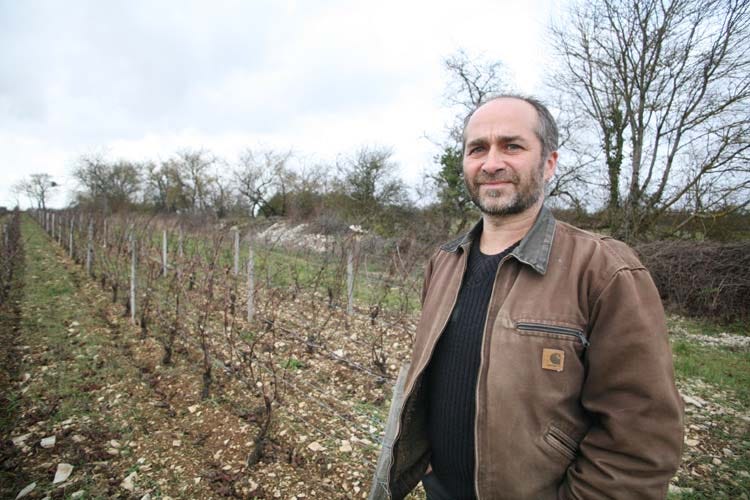
François Ecot in his parcel
Today, François has this parcel which makes 75 ares. He also bought 1,14 hectare on the other side of the village but when asked if he'll get more rights to increase his surface he sighs of disgust, saying that in order to get plantation rights the French administration asks the grower to already have 3 hectares, so there are little chance he gets the green light from the administration even though the terroir of the parcels he is ogling is great and even though he'd sell the resulting wines without problem. He adds that even if he got 5 hectares right away he'd sell the wine easily, considering the demands of his customers abroad. The wine bureaucracy here seems to have interest only for established wineries, not people who are setting up a new winery, even if they thrive and show a strong market response for their wines. He says that when you learn how to work properly in the chai and when you love to work in the vineyard, finding customers for your wine is easy, and just by relying on the overseas demand for his wines he could add a few hectares to his surface without risk. He really loves working of the land and if he's here in Mailly it's because his family roots here are deep, his grand-grandparents had 3 hectares of vineyards around here, he grew up here and knows the hills and the woods since his early years when he played outdoor as a kid.
He can bypass the bureaucracy reluctance to give him plantation rights by buying rights from farmers or owners who gave up making wine or tending their vineyards, that's the way he found the rights for his parcel, but it's a long research and negotiation and it's quite absurd that in this part of Burgundy that would benefit from the revitalizing of a qualitative wine production, there's no understanding of this common-sense issue.
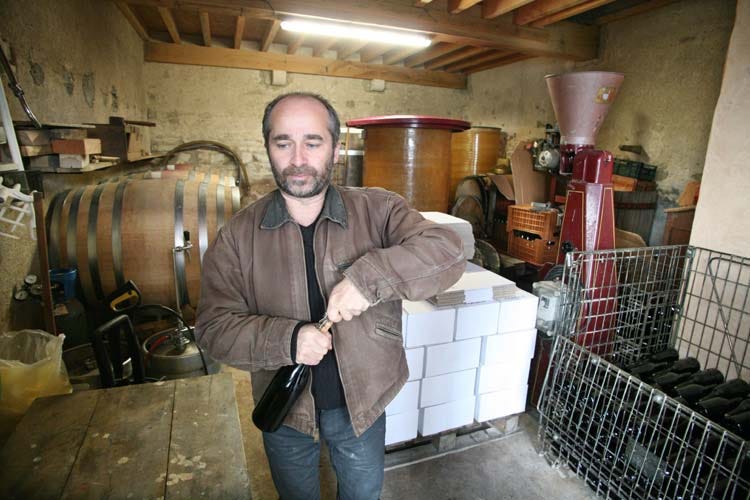
François Ecot opening a bottle
Back in the house, François shows us the vatroom in the side building in the back. The surrounding is a bit messy but he says that he plans to better organize the area and make some remodeling inside and outside the chai, things that he had postponed until now because of the travels and other import-business tasks.
The vatroom is a former stone barn, with large wooden beams and a wide access door.
He vinifies in a large wooden tronconic vat and also in several large open plastic vats that are stored outside and which look like the rain-water containers that I’m using in the Loire.
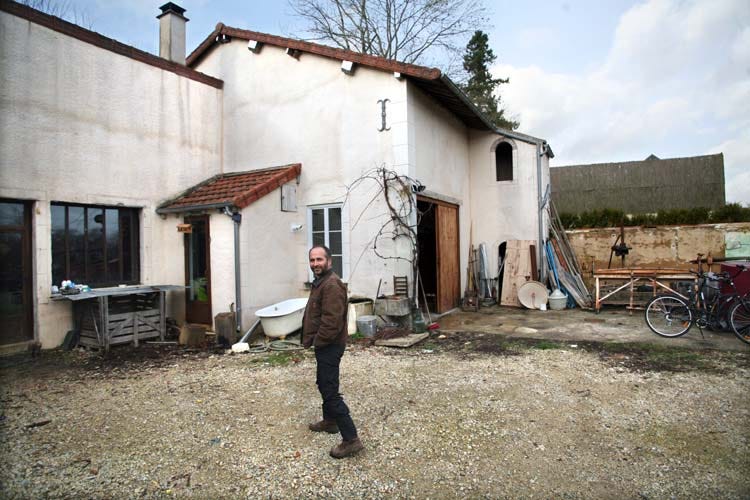
Claude Courtois showed him how to use this type of plastic open vats for the macerations/fermentations. He plans to put a concrete slab or flat stones for a larger terrace with a roof over so that he can work both inside and outside. He’d like to have also an appartment or separate living quarters above the chai to accommodate visitors.
Before opening a couple of bottles, François dissects what was so weird in this harsh 2012 weather. He says that when this heat wave hit the region around august 10, it wiped out the humidity almost instantly : there’s no water reserves on his slope because the earth layer is so thin, compared for example to Chablis where there’s 2 meters of clays which keep a good reserve of water for the vines in case of prolonged heat. Here within two days the moisture in the ground was gone with only 15 to 30 centimeters of soil. On the lower slope the situation was better and the gamay there suffered less, but they’re grafted on 5BB rootstock which are well adapted for these shallow soils.
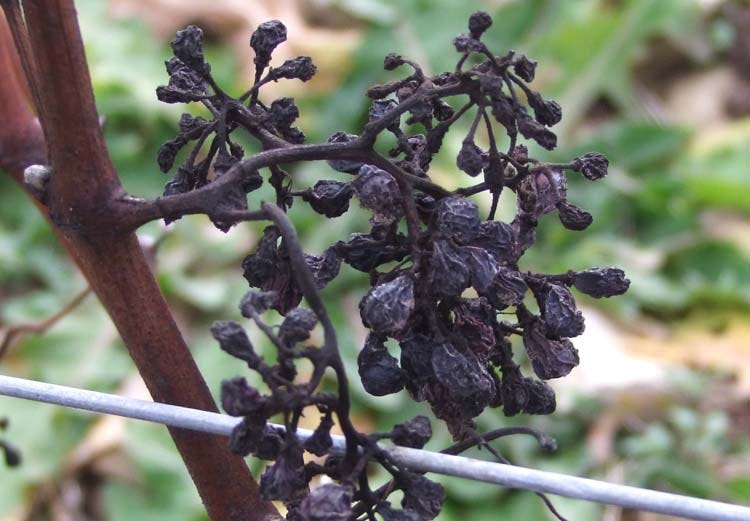
He says that in place where the mildew pressure had been high, the vineyard was beautiful, while in places where there hadn’t been mildew, the vines were more advanced and faded. It’s like if the vines had decided to get rid of their grapes and cut the supplies, the grapes looked as if it was november, dessicated and dead (see the picture on the side above). Usually, the microclimate in Mailly is a blessing : the wind goes north to Chablis and it is attracted by the granitic mass of the Morvan and it just turns around Mailly without harming it. The rain and hailstorm also often doesn’t go beyond Les Raboulins, a strategic hill with woods west of the village, it’s like if the village with the Cure river had a protective wall from the elements. There has always been a drought problem in Mailly because of this microclimate and that’s why people had water reserves for ages under their houses.
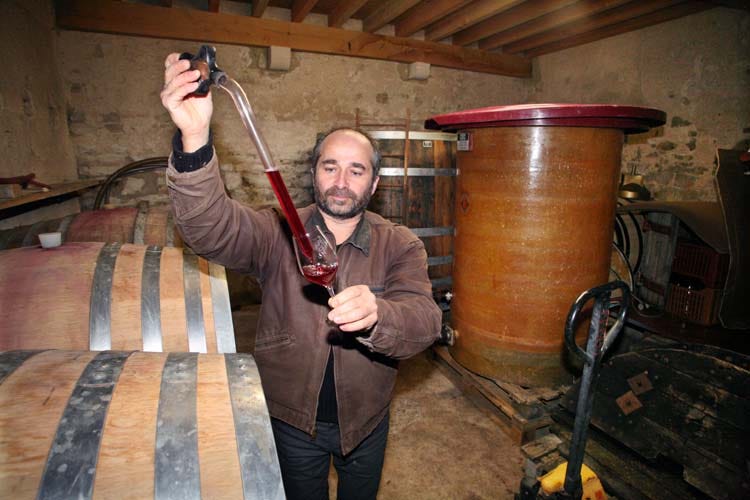
A vibrant Pinot Beurrot
François had opened a couple of bottles to let the wine open itself, but the first wine that we tasted here was from the cask :
__ François Ecot Pinot Beurrot 2011 with a bit of Gamay. From a large-volume cask, a (new) demi-muids. There’s a pepper side in this wine. Some raspberry notes too. Very enjoyable wine with candy feel. Supple wine with light bitterness at the end. Labelled as table wine. He doesn’t print on the label that it’s pinot beurrot but in 2010 when he made the cuvée L’Insolent he wrote on the label about the 6 varieties in there.
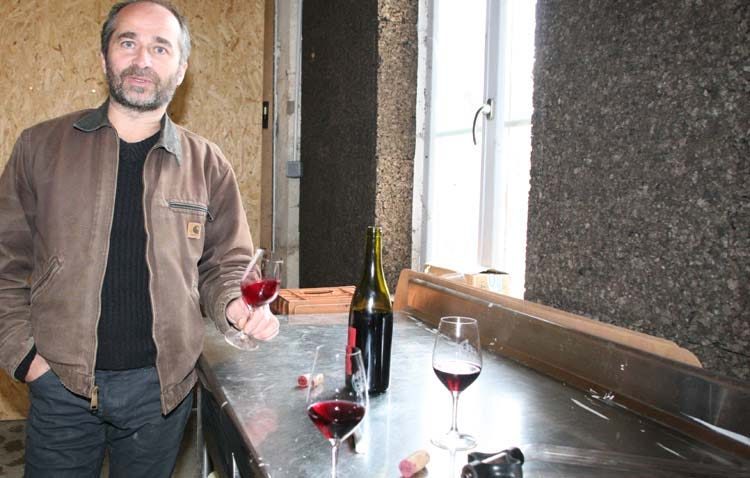
The grapes are picked by hand in 15-kilogram crates, he starts like a carbonic maceration with whole-clustered grapes, either in the Grenier wooden vat or in the large plastic open vats stored outside. He doesn’t add any SO2 on the grapes, this would be nonsense to do that when you make a carbonic maceration. The pinot beurrot usually goes into one of the plastic vats now stored outside. He saturates the vat with CO2 and lets the whole thing macerate until it begins to warm up by itself, checking from time to time with the hand deep inside how the hot and colder zones interact. The particularity of the pinot beurrot is that its stems stay always green, even when very ripe, so this can at times translate into green aromas, but he doesn’t want to destem because in that case if you liberate the juice early you loose the fruit side of the carbonic maceration.
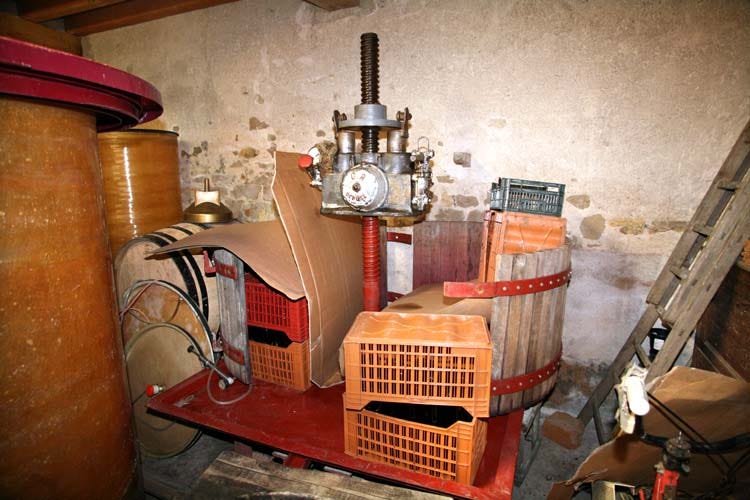
He doesn’t even check the density because there are no taps on his open vats, and after a while the temperature whole thing rises and then the attachment of the stems with the grapes begin to ease and he takkes the stems off like that, one by one and by hand, leaving the grapes by themselves. The whole thing lasts 3 wxeeks, after which he recovers the juice through a dripping. He fills his press (pictured on right) with the pinot beurrot and completes the filling with other grapes, so that he knows that the first juice that will go out of the press is pinot beurrot’s, although there is also pinot noir and gamay in there. By the taste, he says, you recognize here the pinot beurrot, the resulting wine bears the marks of the variety.
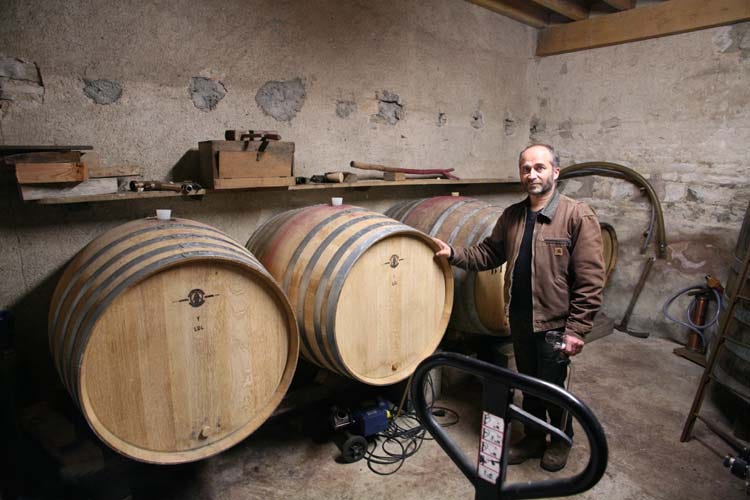
500-liter demi-muids
François Ecot bought new large-volume barrels (500 liters each) from the Stockinger cooperage in Austria, their quality is unique because of the type of wood they use. They’re quite expensive but they don’t mark the wines with wood, and he tasted wines made with these barrels from Antoine Pouponneau (Corsica) and other people and each time he was impressed. He heard (he’s not sure of that) that one of the reasons these demi-muids are exceptionnal is because at Stockinger they bend their barrel staves when the wood is still fresh. This pre-bending avoids the stress on the wood fabric and there’s because of this less wood imprint on the wine.
When he needs to rack from a cask to another (or to a vat), he does that with air pressure, “pushing” the wine through the lower opening, he learnt that from Pacalet. Using this pump-less mode, he could rack this pinot beurrot without SO2 adding and he’s very happy about that because thanks to that he avoids the heavy, reductive side in winter. He looks for wines which have a story top tell, which have aromas and their own “music”. This wine we’re tasting never came in contact with any sulfites, and there’ll be none at bottling. His goal is to not even use a sulfur wick when racking these demi-muids, he’ll probably keep the pinot beurrot there until september, just in time to entonner the 2013 juice in its place. The empty casks in the bottom of the cellar have been méchés sur lies, which means he left the lees in there and burnt a big sulfur wick (5 grams) inside, leaving the cask closed, in the way winegrowers do in the Beaujolais.
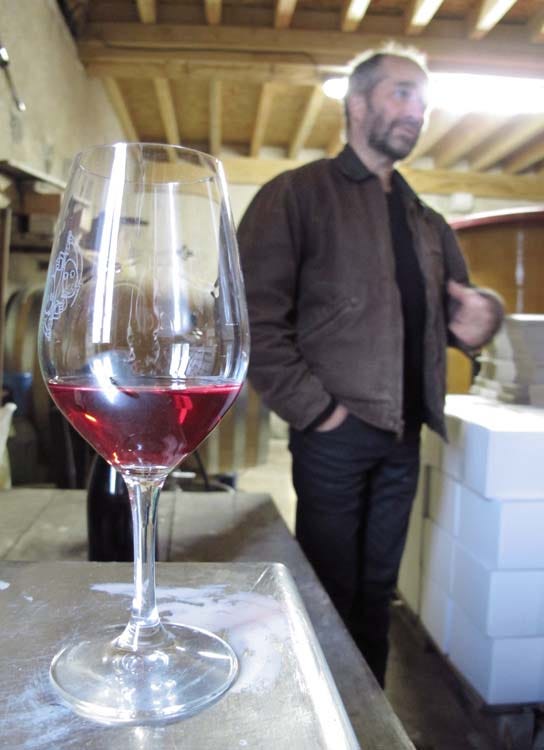
Then when he needs the cask, he opens it, he checks if everything is fine, cleans it with high-pressure water and fills it again with water to make it tight.
__ The other 500-liter Stockinger demi-muids : pinot noir and gamay. Here the tannins are more obvious, but partly because the wine in the glass is cold, plus he says that the moon may play a role. François makes a mini-blend by adding wine from a 3rd, smaller (450l) demi-muids (not a Stockinger), because that’s what the final blend/cuvée will be. The resulting wine has prominent raspberry notes, interesting. More supple, more velvety, here is a wine which yields lots of pleasure after you warm your glass. In another mini-blend, he adds a bit of pinot beurrot and he says that it does a good job, adding a menthol note to the wine. He’ll keep a small batch of pinot beurrot (probably in magnums) for the diehard fanatics (like me) who love having these now-rare varieties bottled separately (my advice is, register early if you want some...), but most of the pinot beurrot will be blended.
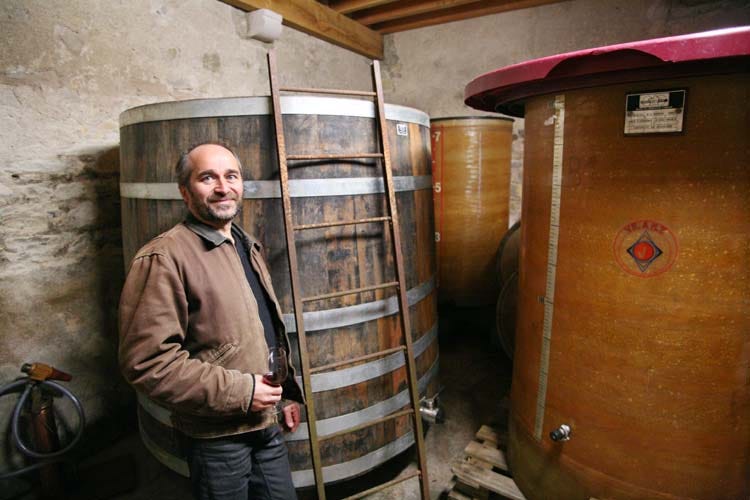
Near the Grenier fermenter
François says that for him, or at least for his wines, the 5-year delay in the bottles is the right one to fully enjoy what the wine can offer. He usually bottles the wines after 15 to 18 months and puts them on the market the following october which makes 2 years.
__ François Ecot, Seconde Nature, red vin de France 2011. Gamay (majority), Abouriou, César. Bottled september 2012 (900 bottles in all). Darker color. Appealing nose, I don’t know if opening the bottle in advance counts but the wine definitely opened itself. In the mouth B. and I recognize the gamay but there’s obviously something different with the abouriou and the César, something like liquorice in the taste.
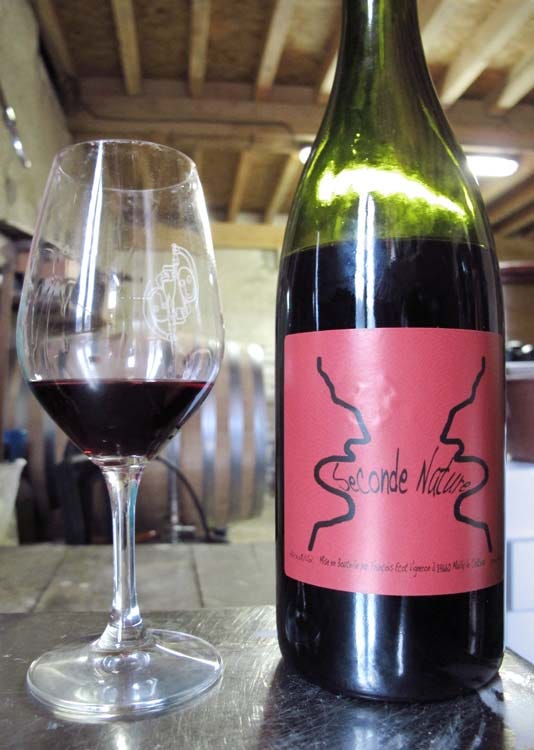
B. ads about the bitterness at the end of the mouth, and François says that this appeared when the climate change became obvious, around 2003 or 2005 on hot years, that’s what Eric Pffferling says that The grapes lost some malic acid and gained some bitterness. The aromatic range has been sliding from the pear, apple to the arbutus fruit like you find in the south for example in Alain Castex’s wines. A wine is foremost the result of a place and of a vintage and the indigenous yeasts render that well. This said, he says that it is possible and allowed to partly blend several vintages, although most wine amateurs aren’t aware of it, it is in line with a long tradition and he does it occasionally.
François awakened to the large-size barrels when he visited with Jenny the Domaine de l’Abbaye du Petit Quincy in Epineuil (north-east from here). The winemaker there was fond of using large-volume casks because his parents had used these containers for their vin de pays. He doesn’t plan to change his demi-muids even if they get older, and he’d like to have or two larger, oval casks making 1500 liters each (of the type you see in Alsace) in the bottom of his vatroom, but they are expensive when new (at Stockinger and Grenier).
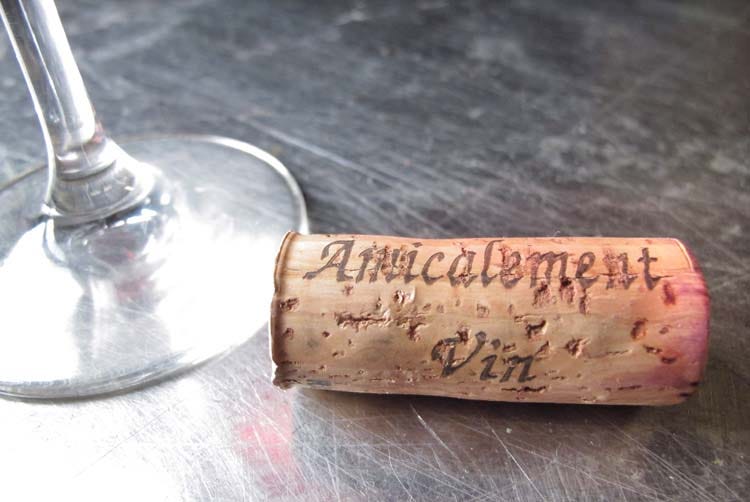
He has contacts in Alsace or in the Jura to find second-hand ones at a good price. You can also find very affordable such oval casks if you look in German-speaking Switzerland.
François makes from 1200 to 3000 bottles every year, sometimes less if the weather conditions are difficult. He basically never added sulfites except maybe a couple of times when he added 1 or 2 grams in a single cask because it seems to veer astray, but this 228-liter volume would be blended at the end into a 2000-liter volume, so it’s as if his wine never saw SO2.
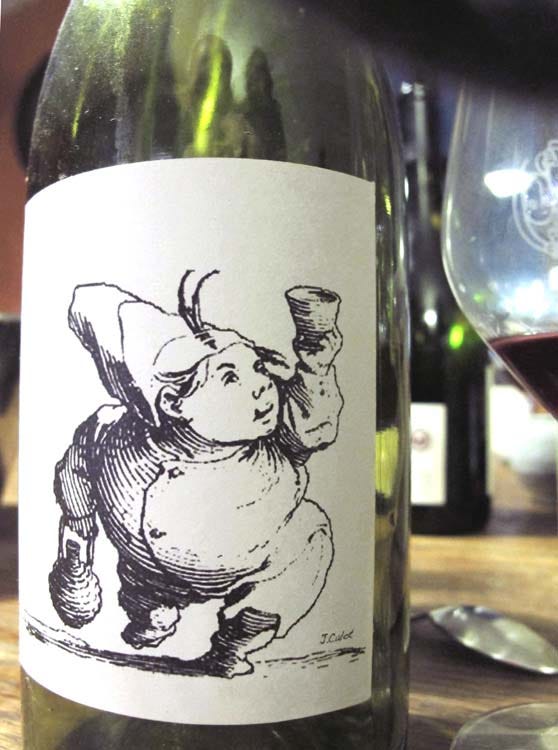
L’Insolent, a 6-variety red
We join then François’ family in the kitchen with his wife Cécile and a couple from Paris who also came with their daughter.
François first pours us a glass of white wine, a try of his, with a nice golden color. It spent time in the Stockinger barrel. It had camomile notes like crazy he says, but the minerality side should come out, you need to wait one year and a half. There’s an oxidative side with also exotic notes, B. says.
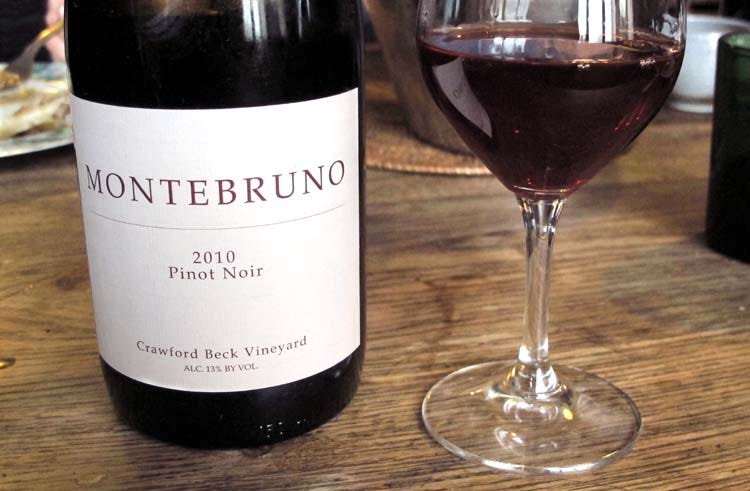
__ Montebruno 2010, Oregon Pinot Noir. One of their finds for the Jenny & François business. Made by someone named Joe Pedicini who grew up in New Jersey and came to Oregon to make wine from purchased grapes. In 2010 the guy worked without SO2. Nice wine, easy drinking. Citrus notes, tobacco also, says François. Fresh wine too. We taste also another cuvée from this vintner, a more serious wine, one you need to eat with.
__Then we have a glass of his cuvée L’Insolent, vin de France 2011. This red is a blend of 6 varieties : pinot noir, gamay, pinot beurot, abouriou, césar and pineau d’aunis (Union de six cépages de la vigne à la quille). 12 ° in alcohol. The wine has a bit of reduction of the nose, which eases up after time. The drinkability is good, the wine is a bit perly, it a thirst wine with an easy swallowing, without second thoughts. François sells his wines for 7 Euro without tax, and for less to the individual buyers who come to the winery.
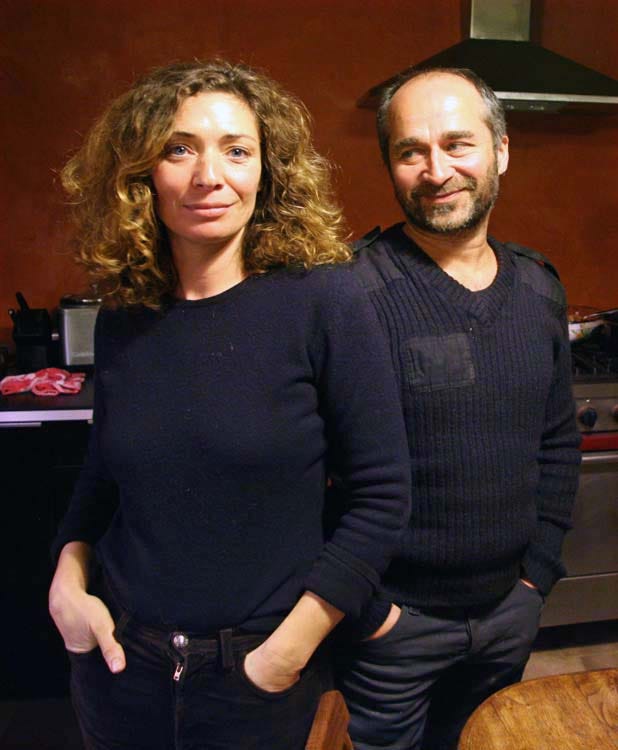
What François appreciates in a wine is when you can drink it with the certitude that you’ll not be knocked down after a few glasses. One of the reasons he was excited to work with people making wine without SO2 was that their wines didn’t smash you like conventional wines often do. Around here he says, he remembers that when they had wine with friends years ago, they were smashed by the wine after a while, after just 3 glasses : it was like if your brain was frozen still by the stuff. Plus, when they make wine on kimmeridgian soil like in Irancy, not really ideal red-wine soil, it gives the wine a nervous, unpleasant side which makes it harder to digest. SO2 addings don’t help of course, he says, and also sugar (chaptalization) which is routine around here. He jokes that you shorten your life by drinking this stuff on a daily basis, it ruins you, you can feel it after a couple of glasses.
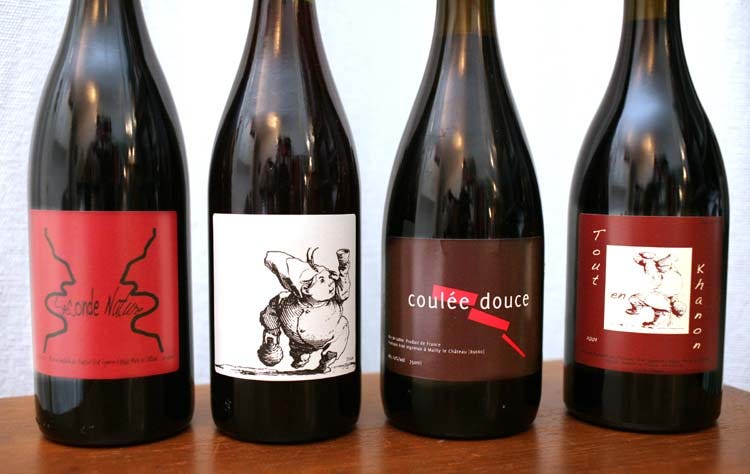
I think that it’s an important point, we all had these supposedly-trusty appellation wines which are often not only boring but downright tiring, I mean you physically feel exhausted and joyless after a couple of glasses when you’re normally expecting the opposite from a wine.
François recounts me when he was scouring the wine fairs like the one of the Porte de Versailles in Paris. He befriended then Jean-Christophe Piquet-Boisson, who is a famous wine broker in France, and thanks to his intuition he discovered several real artisan vintners who had interesting wines in their back room (not always the ones they were selling on the market). He says that the trick is to get to know the people you feel are doing a good job, and there’s a chance that when visiting them you stumble on a cuvée which is even better than the wines you already tasted at their stand.
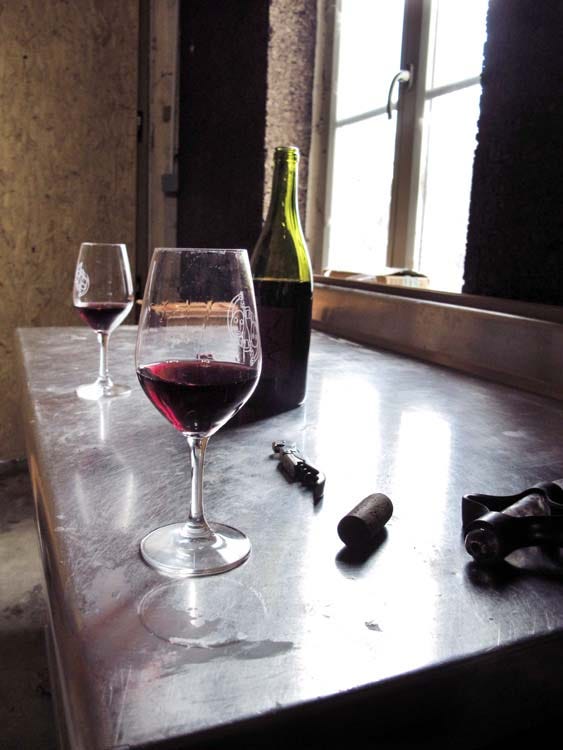
Still life -- Bottle and glasses
François tells me some news from the wime import business in New York, like they introduced for a few of their wines the bag-in-box system known under the name of key keg and designed for bars and restaurants, with a container volume of 20 or 30 liters. It allows the restaurants and bars to serve SO2-free natural wine in the best conditions at a more affordable glass price on the consumer end. For individual buyers they have a line of products called From the Tank, this is a selection of 3-liter bibs for people who want to drink these wines at home in larger volumes and smaller price.
François Ecot’s wines can be found in Paris in restaurants like Le Grand 8, La Pulperia, at Autour D’Un Verre, at Chateaubriand, Aux Deux Amis, Le Bistral, Les Fines Gueules, L’Agapé. He also sells to cavistes like Au Nouveau Nez (two shops), La Cave des Papilles.
His wines are exported to the U.K (Aubert & Mascoli).
Watch Aurelia tasting and commenting François Ecot’s wine in Quebec
François Ecot
8 Boulevard du Nord
89660 Mailly-le-Chateau
phone +33 3 86 81 43 92
cell + 33 6 11 17 66 68
Facebook
francois [at] jennyandfrancois [dot] com