
Wine News (59)

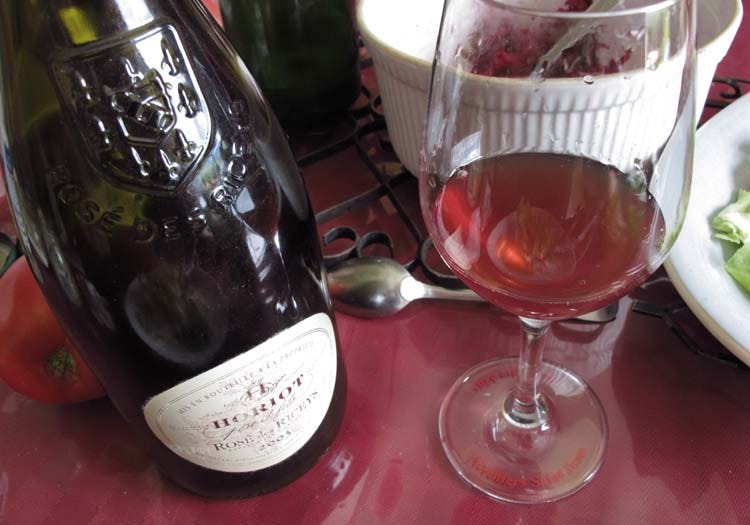
A very nice still rosé from Champagne
We had a few weeks ago this very nice rosé des Riceys, a still rosé from Champagne by a Maison named Champagne Horiot Père & Fils. Very few people know about the still rosés of Champagne, and the domaines who keep doing them in the appellation area are quite courageouis because they could make more money with making 100 % of Champagne (I mean regular sparkling).. This was a delight, and this was also surprising because the wine was almost 11 years old and 2003 was supposed to be such a devastation for wines if you kept them in the cellar.
The wine which was maybe still approaching its peak was delicate and suave, I couldn't stop helping myself along the lunch. Both B. and me had bought wine there and this was the last bottle of rosé we had from this estate if I'm right (my cellar is not well organized).
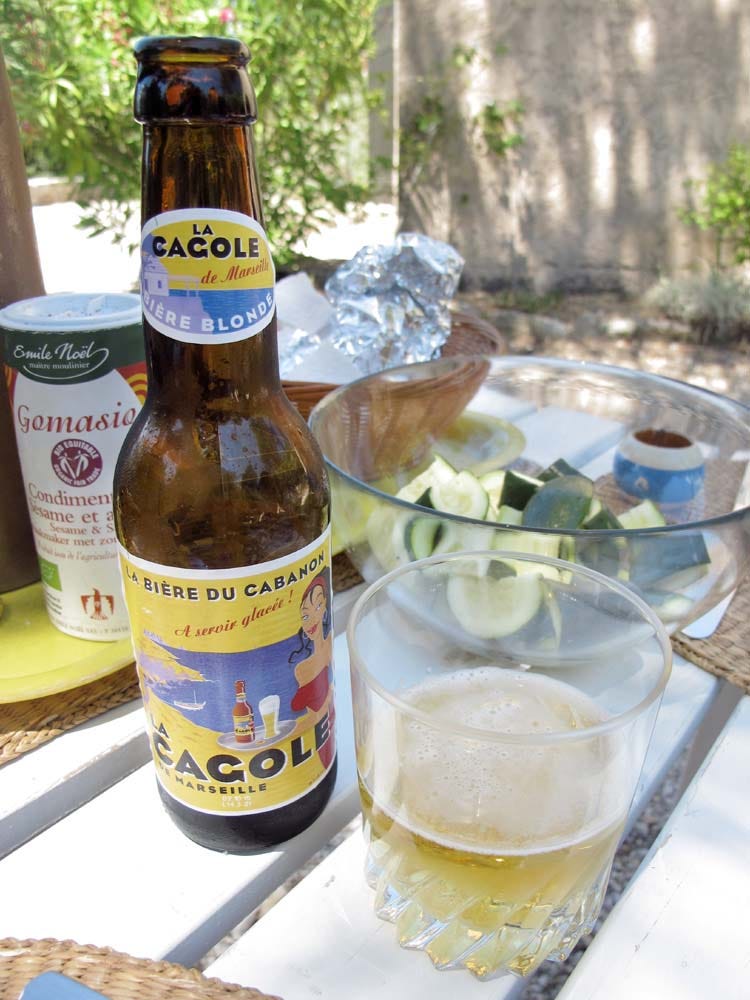
A gorgeous beer from MarseilleThis was a nice and refreshing discovery we made while resting in Provence this summer : a craft beer from Marseille named La Cagole, this beer is a great thirst quencher, it’s suave and silky, nice job. It bears a familiar name for those who know a little bit about Marseille, a cagole is a lightly-dressed young girl who attracts the attention with her fiery speaking as well as her flashy attire. Cagoles have been involved in catfights through Youtube postings like this one and this other, and the cultural figure of Marseille resurfaced, pushing many people to post imitations of cagoles online.
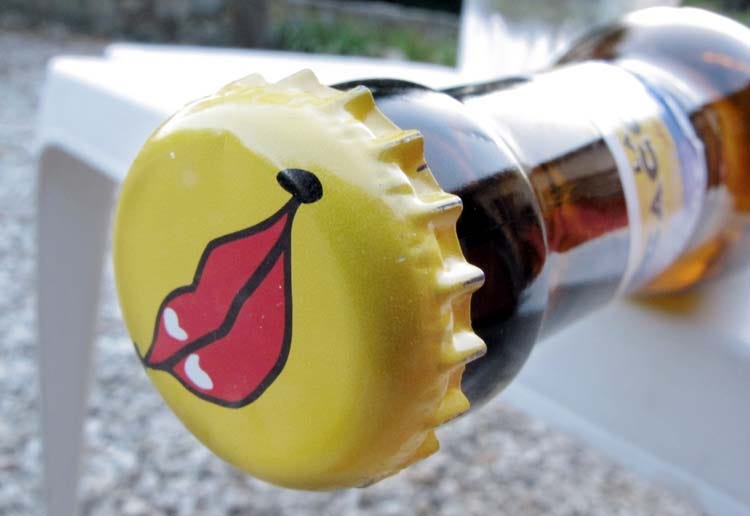
The beer bottle has this flashy and pleasantly sexy look on the label with in addition this nice crown cap, from what I read online the beer was brewed was made partly in eastern Europe, partly in Marseille at the beginning of the brand in the early 2000s’. You can find the beer in the beer aisle of the supermarkets in Provence, sold in 3- or 6-packs (a 3-pack cost 3,9 €).
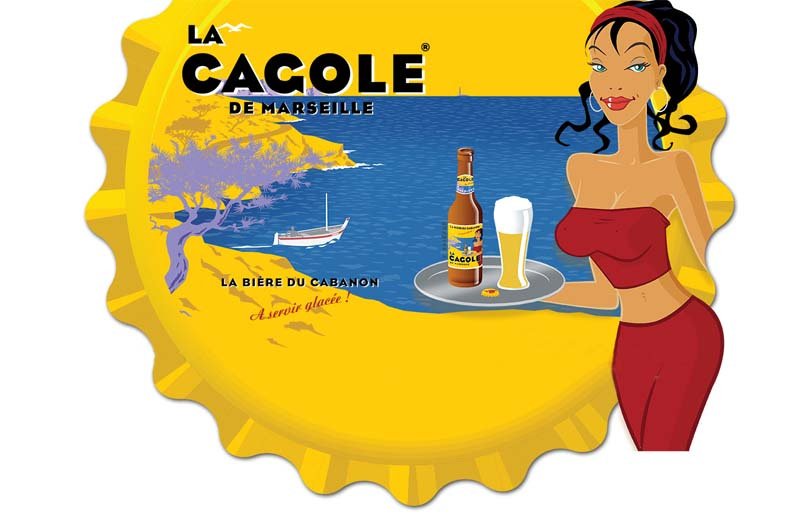
The brewery website doesn’t give details about the birth of the company, except glamour things like the two guys behind this thought about this idea while sipping an apéritif in Sormiou (a beautiful rocky cove along the Mediteranean east of Marseilles). I found out that the beer at least at the beginning has been brewed mostly in the Czech republique and for the rest in downtown Marseille in the Panier, a culturally-loaded neighborhood there.
I just regret that we have only the usual French serving size here, 33 cl instead of the German 50 cl or better, the American 66 cl...
In short I think that this beer has a bright future, it’s not overpriced and it’s a genuine pleasure to swallow (and I’m not rewarded in any manner by this brewery to say that...).
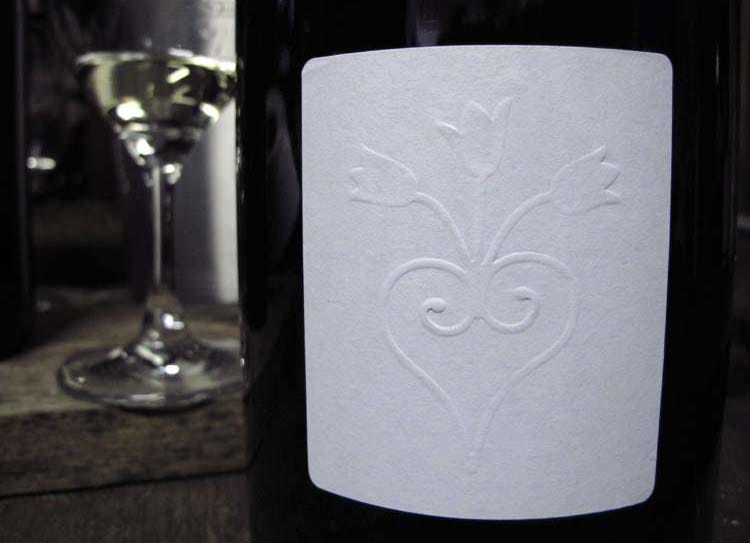
Noëlla Morantin Sauvignon 2013 (great label)
I visited Noella Morantin a couple weeks ago with two friends from Belgium who are setting foot in Touraine, we tasted several wines with her :
__Terres Blanches 2013, a chardonnay bottled august 14. Nice wine with richness, Noella says that it was to recover from the bottling which was very recent (she’s tough when judging her wines, seems already tasting very well). 12 % in alcohol.
__ Sauvignon 2013 (label pictured above). This is the second vintage she’s making this wine, it comes from the vineyards that she purchased a few years ago (planted in 1943). Nice wine, the other people like that too. The wine is more powerful, more intense.
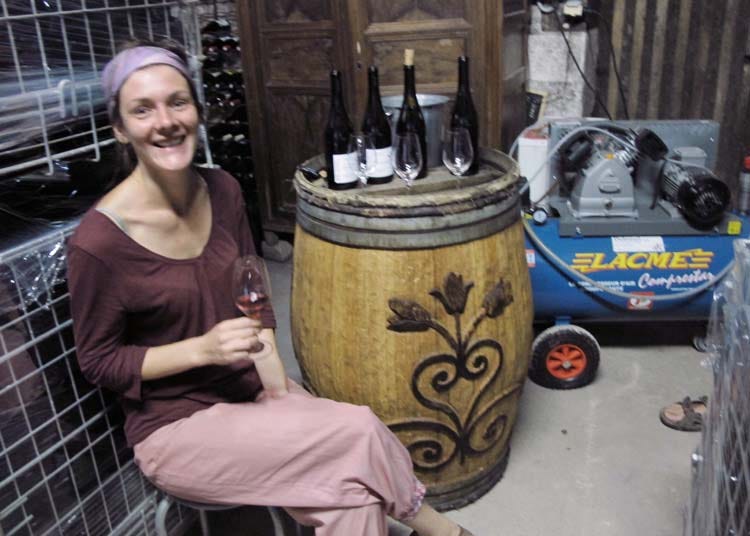
In 2012 for the first vintage she made only yields of 4 ho/ha and in 2013 it improved slightly to 15 ho/ha but it’s still very low. Again she thinks it will taste much better as the bottling is also very recent. This Sauvignon makes 12 %.
__ La Boudinerie 2013 (Gamay), bottled last june. Reduction on the nose, she says, that’s not something I’m afraid of. Made from the gamay on the plateau along the vineyards of Clos Roche Blanche. Lightly perly in the mouth but there’s been some SO2 added. In general all the whites get 1 gram SO2 or a bit less and same for the reds, this is added at racking. She notes that the mouth is rounder than some time ago. I personnally appreciate the light tannic touch in the mouth. She’s happy wityh these 2013 because compared with 2012 at least she got some wine (In 2012 she had frost and lost 65 % of the potential fruit). 11,5 % in alc. Surprising.
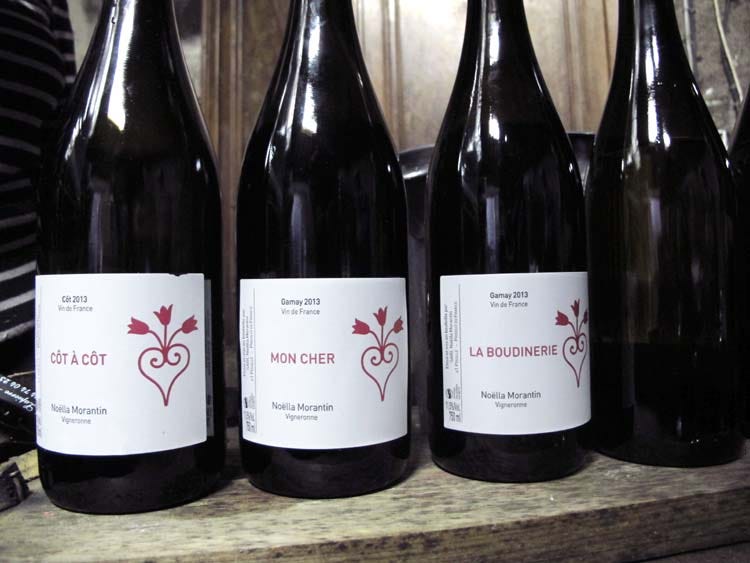
__ Mon Cher 2013 (Gamay), now made only from the vineyards she bought from Les Bois Lucas. 11,5 % in alcohol ! Tastes so good you can’t believe it’s that low... It’s round, generous. It’s dry, no sugar left. Her [conventional] neighbors told her that in 2013 she was certainly going to chaptalize for a change because the vintage was everywhere so low in alcohol, but she didn’t change her work style and frankly when you see the result you understand she was so right (Everyone chaptalizes in Touraine in this sort of low-alcohol vintage).
__ Côt à Côt 2013 (Côt of course), all these wines are bottles as table wines. Concentration on the nose, the mouth is silky, a pleasure. And take a seat, it’s 11 % alc... She says she bottles lots of magnum from this. Vinification : all destemmed (because this year the stems didn’t ripe fully), short maceration, a few days, press juice and free run blended immediately.
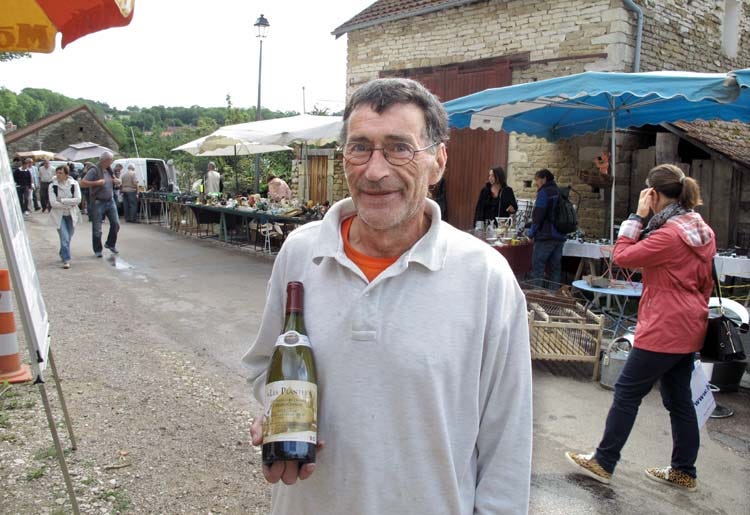
A nice Chardonnay coming out of nowhere
Now you can discover great wines on street flea markets ! I don’t mean old bottles found in an attic, here I found an artisan winemaker named Alain Maitre in the yearly flea market of Mont-Saint-Jean in Burgundy who was having passerbys taste his wines and buy some if they liked it. And I really liked this wine, it was whole and alive, with a hint of honey that made the swallowing very pleasant. This is a Chardonnay labelled under the appellation of IGP Coteaux de L’Auxois; Elevage on lees and in oak casks.
Asked by other people how he made his wine, I had the surprise to hear that although he was obviuosly unaware of the natural-wine subculture that was sprouting here and there in France, he was making his wine without the use of any additives, including SO2. At some point he appeared very happy anud about the fact that he had met recently an enologist and thus he would work more securely. I tried a shy remark on the fact that many good vignerons make especially-good wines because they don’t listen to enologists but I couldn’t be more specific, it would have been a bit arrogant from my position. I cross my finger that Mr Maitre will keep making the wine I tasted this day, which could be well compromised if hefollows the rules and needless precautions given by an enologist. If he could make the wine I tasted that day, what does he need ?
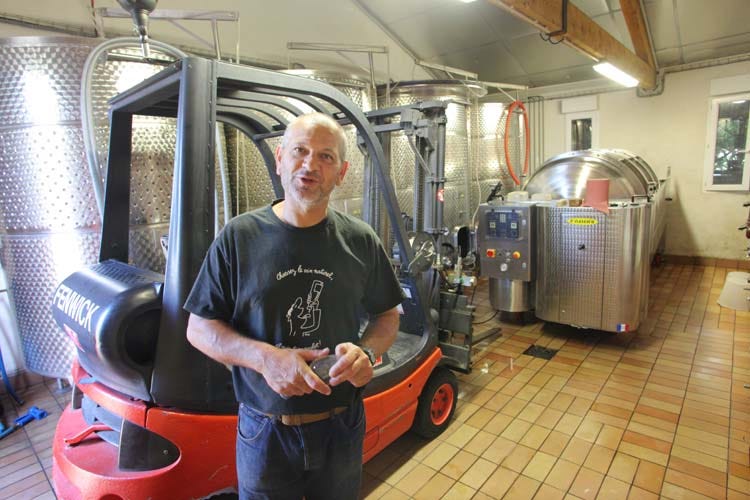
Eric Pfifferling in his vat room
We spent a day near Avignon in early september for a family reunion and as our base there was a mere 7 km from Tavel, I couldn’t resist the temptation to call Eric Pfifferling for a short visit, which he agreed. He was in the middle of harvest these days but this saturday late afternoon was quiet and he would resume the picking with his team the following monday.
The vat room was immaculate, spotless clean, on the side there was an oval foudre made by Grenier, these elegant foudres that are more common in
Alsace or austria are relatively rare here I think. Eric says that Marc Grenier was more into this type of foudre originally than into the tronconic fermenters for which he is now wellknown. He says that when his storage volume allows it he’d like to have a 30-hectoliter oval foudre for his Tavel wine, especially for the 18- or 24-month élevage.
He grabbed a glass and filled it with a redish/pink juice from a stainless vat on the side, this was the brand new Tavel 2014, still at the stage of a sweet grape juice, utterly delicious. Made from Grenache (40 %), Cinsault (30 %) & Clairette (30 %). It’s still in the maceration stage with the whole-clustered grapes (a semi-carbonic, with a light foot stomping), the color is already growing in the juice and it will begin to ferment soon.
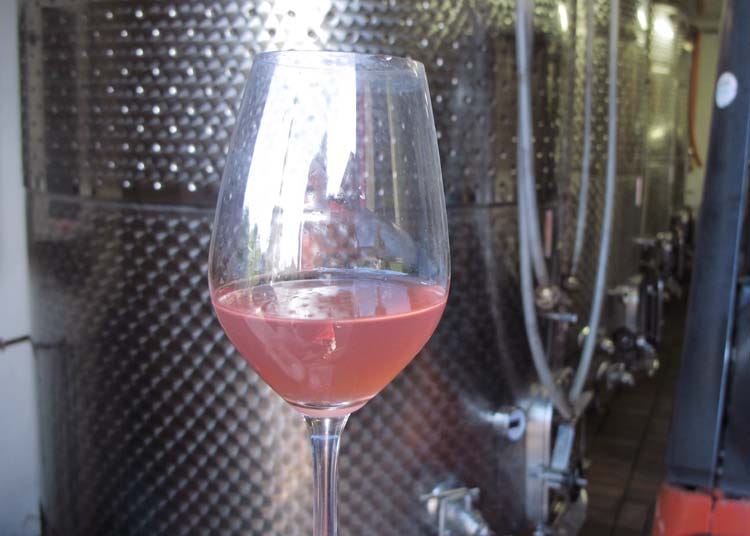
Usually he doesn’t do foot stomping but as this year they have lots of grapes they actually stomp a bit the grapes to be able to put all the volume in the vats... The alcohol potential is 13, he says that in the area of Tavel most haven’t begun picking while he has almost picked a big third of his surface. Wineries here want to pick grapes at 14,5 or 15 but then afterwards they have to re-acidify because it’s too jammy, because the enologists wait for the phenolic maturity. But for his part this year he saw that the right phenolic maturity was reached with much lower alcohol potential. Asked if he sees that through lab checks, he says no, it’s mostly by visual checking, he does some sugar/acidity/etc checks for example but the visual check is the most important as well as the tasting and visit on the parcels. Speaking of the vineyard management, there’s a good chance they’ll switch to Demeter certification in a near future, he already implemented some biodynamic sprayings and he began to put in place these new practices on the vineyard which has responded positively in terms of energy.
Speaking of the Clairette part in this blend, he says that the volume was nice this year, and he’ll not make a separate cuvée of Clairette, it’ll go all in the tavel, it brings density, a certain tension as well as some bitterness which he likes to have in his wines (he says actually “our” or “we” for everything he does because his son is also active in the winery). He doesn’t know the final volume of wines this year, he has a policy not to produce wines he considers not good, so his fruit volume is sometimes bigger than the end wine on the market.
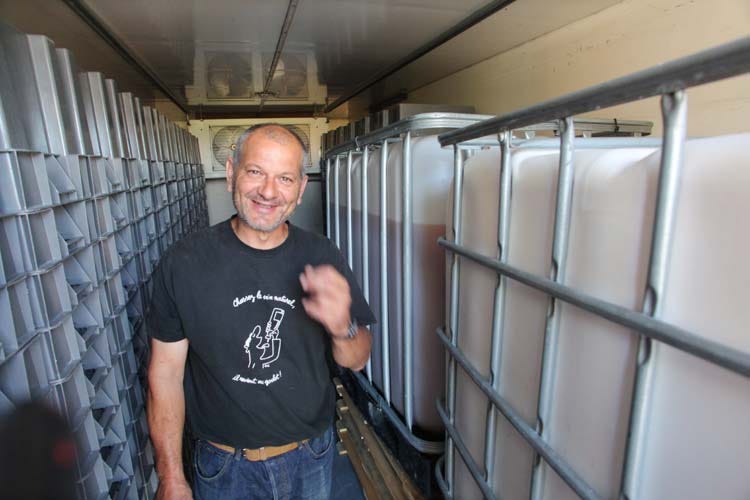
In the refrigerated trailer outside the chai
In general there’s a major problem they face in the region, it’s the decline of the vitality of the vineyards, they’re a few growers here who think that the selection of plants are not up to what they need : many of the vines/rootstocks now present in the region are the result of choices made on the 60s’ and 70s’ when high yields were the main focus, these selections are not tolerant to mildew and oidium especially that the nurseries who are in charge of the growing aren’t generally interested in doing the job to fight the pathologies. Because of this they’re forced to do more work in the vineyard. Another thing is that most rootstocks in the region aren’t adapted to the recurrent hydric stress encountered in the region, there’s a renewal to do on this issue too. He has some Grenache in Tavel which he planted in 1999 with rows of 110 vines and every year he gets 20 dead vines per row (from esca), there’s obviously something wrong here.... He has also a high mortality in his Mourvèdre vineyard that was planted in 1996, last year he had to replant 360 vines, it’s mostly esca and DBA (Dead Black Arm).The selections of clones and rootstocks are not adapted, it’s striking, he says, to see much less mortality on vineyards that were planted in 1870 or 1890 (there are a few of them around). And he says that today you’re virtually not allowed to make your own massal selection with woods sourced among fellow artisan growers, so growers are virtually obliged to trust the nurseries (who don’t scrutinize the problem). He also has a 15-are parcel planted by his grandfather and there’s only 10 dead vines there, so there must be an explanation to these high casualties there and these surviving vines here. Then there’s the graft technique issue which may play a role in the diseases and adds a layer of uncertainty in the whole question.
Asked about the weather this year, Eric Pfifferling says that the weather was difficult with lots of rain all summer, beginning late june until about the 3rd week of august, it rained every week and the total rain reached 150 mm just in july/august, which is a lot for this Southern-Rhône region. The rain made the grapes bigger with at the end of the season some botrytis occurences. Then the last 10/15 days [this visit took place sept 6) were hot with wind (mistral) which allowed everything to dry and heal, the picked fruit are superb. But they had a lot of work to do, like taking down leaves and even some grapes like they do in Bordeaux because it was wet every morning in the vineyard, he never had to do that before (except on a few parcels in 2008), but the result was obvious with the healthy grapes. In comparison in 2013 there was virtually no harvest (230 hectoliters only) and 2014 seems to be a good year at the end. Now they’re working on about 10 hectares on vineyards and they took 2 years ago a rent (fermage) tied to the coop which makes 2 hectares. By 2018 they’ll be free from the obligation to sell the grapes to the coopérative in 2018 for these two hectares, which leaved him the time to convert the surface quietly with the right farming. On top of that he has 2 more hectares of vineyard which he’s not farming himself, it’s on Lirac. The 2 hectares tied to the coop are on a good terroir and he’s happy for the future when they’ll be fully converted.
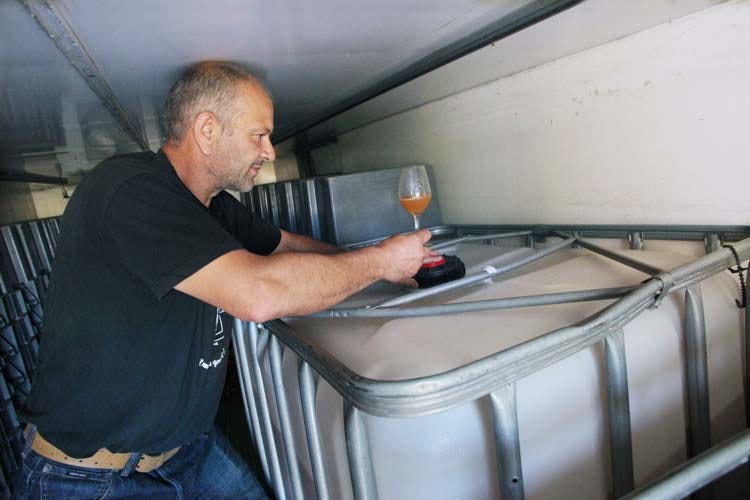
A wild white
At one point Eric Pfifferling says that he has recovered vineyards that has a dead soil underneath, for example once he uprooted a few years ago 600 vines of Cinsault and they didn’t find a single earth worm, the soil had turned dead after years of chemical sprayings. He says that the intense use of copper over more than a century has left durable scars in the terroirs. Today even on a difficult vintage with lots of rain he wouldn’t go beyond 3 kg /hectare but in the past they had mostly only copper and the dosage
was very high. Herbicides are bad for sure he says but their use lasted less than the use of copper, 100 years of copper spraying leaves a durable imprint in the ground.
He noticed for example that when he began to make wine there was so much copper in the soil that the fermentations were sluggish because copper was present in the grapes in such amounts that the living organisms of the fermentation were affected. In terms of residues in the wine the risk is less obvious because copper stays on the must and gets separated mechanically from the wine as it stays with the thick lees. He says that he makes regular lab checks for the copper levels on his must to know if it can influence or impede the bacterial activity; you have to stay under 5 mg to be safe in the maceration juice and his lab data are always under that, plus after the débourbage (settling of the lees) the amounts fall to 1 mg which is nothing.
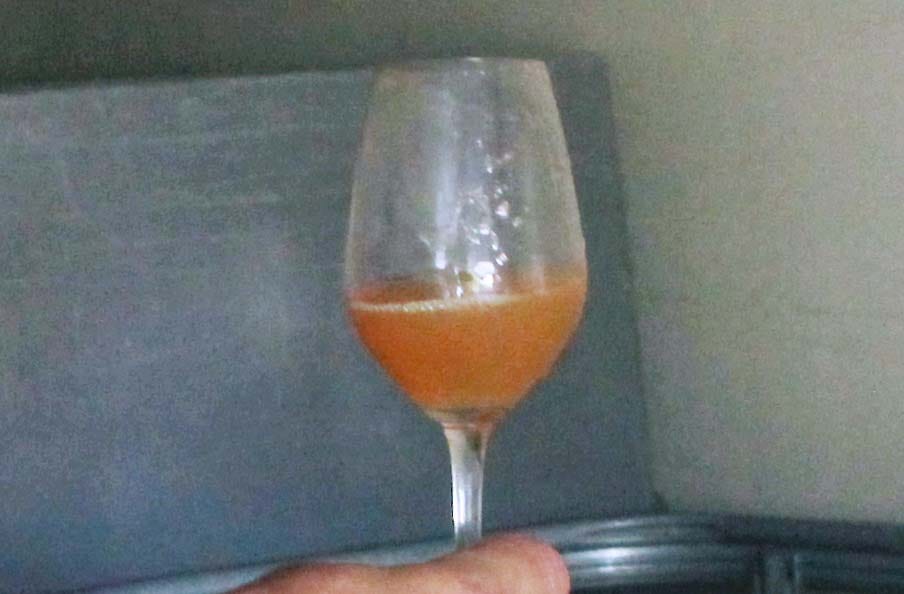
That’s when Eric shows me where they do the débourbage, in a refrigerated trailer where white cubic vats of wine stand under cool temperature (12 ° C or 53,6 ° F). The wine in these two vats is a white Lirac (100 % Grenache Blanc), it has a wild rusty color, something that would frighten many conventional winemakers and push them to add SO2. Eric says that the juice will ferment and become naturally clear after some time, and not using SO2 allows the juice to be confronted to oxygen which is good in the long term for the wine, it always yielded good results for him without accidents, even if now and then an oxidative note can surface in certain wines. I taste the two juices, they’re very different as the first vat contains the end of the press, it’s more concentrated, very interesting.
The right hour of the day in Provence
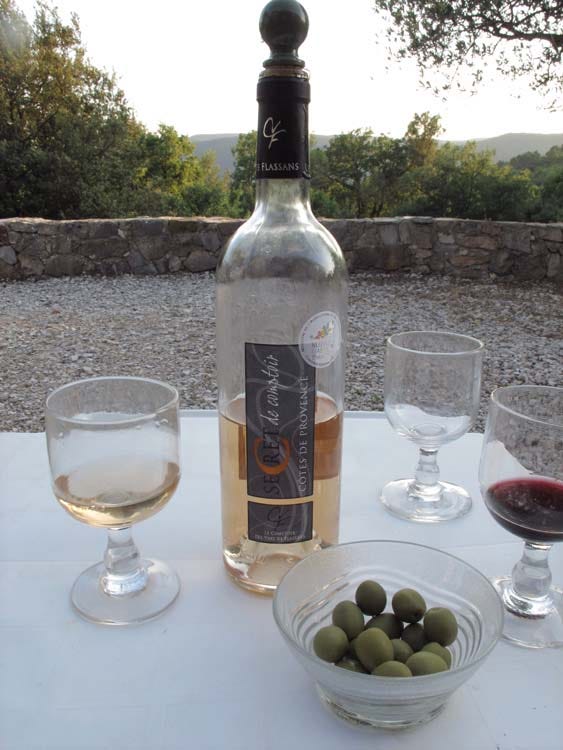
We had our lot of rosé this year again, although I didn't buy in bulk this time, it was rather random bottles bought in the supermarket (sorry for this shameful admission). Provence has this magic that frankly when the right our comes in summer, any bottle will do it (well, almost), it's maybe I guess when you drink wine in the caribbean, you become forgiving if the wine is so-so, as long as it's cool and fresh and didn't cost you too much. There's a wine we liked more than the few others we tried (not pictured here), it was a Domaine du Loou rosé, the cuvée made from organic vineyards (priced something like 4,5 € if I remember). I had made a short visit of this winery years ago, it's sitting at the foot of wooded Provence hills.
Soft pack for your pocket booze
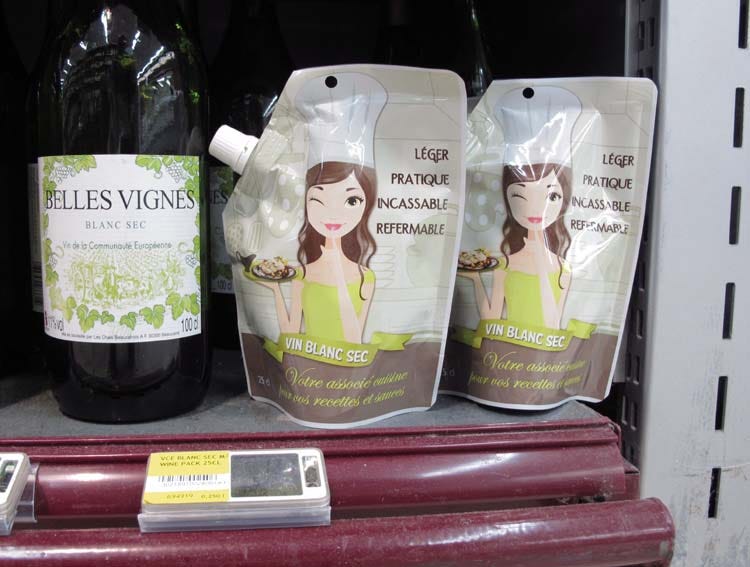
But while in the supermarket I saw that the wineries or rather the négoce are not in short of imagination to sell fancy products based in cheap wine, like this 25-cl plastic pouch of dry white wine, a mini wine pack that is advertised on its front as "light, practical, unbreakable and resealable". I was already imagining the guy holding his plastic pouch for his dose of crap wine but the few words printed at the bottom hinted that the wine was for another purpose " Votre associé cuisine pour vos recettes et sauces", meaning this wine is for cooking, and it probably means that otherwise it's undrinkable I'm afraid. This is made by Inno Vo, a brand specialized in innovative drinks. This 25-cl pack cost about 1 euro if I remember. For a comparison, the one-liter 11 % alc white crap on the left ("Belles Vignes") labelled "wine from the European Community" cost a mere 1,85 €, and I wouldn't be surprised this is the same wine...
Another weird drink
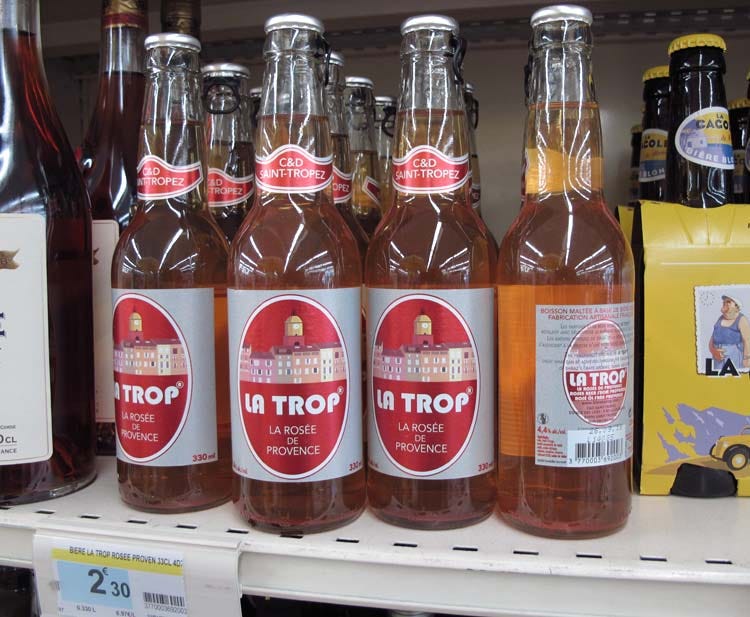
Here is something different for the bored consumer : La Trop, a malt-based 4,4 %-alc drink made from beer and associated with syrah. A "rosée beer from Provence" as it is stated in English on the back label.
The name la Trop" is an allusion with Saint Tropez, the fishermen village on the Mediteranean where the jet set spends summer. You won't mind if I didn't try this, next time maybe... This 33cl bottle cost 2,3 €.
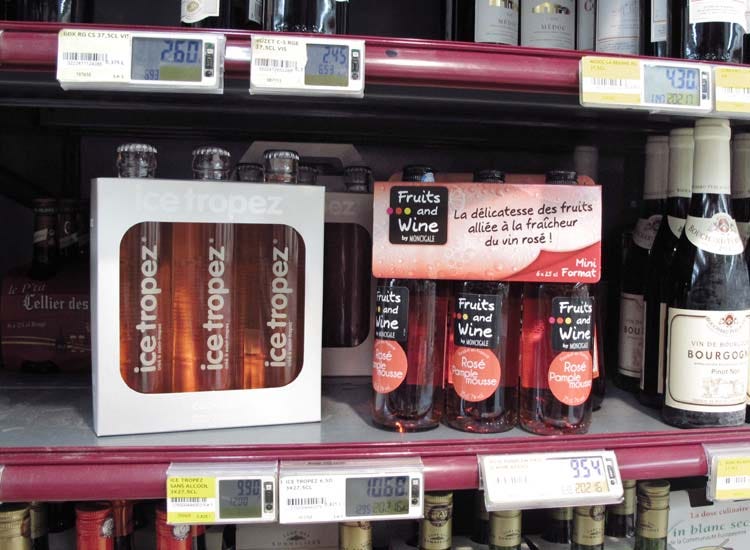
Other fancy drinks
Yet two other fancy commercial drinks :
On the left, a rosé without alcohol, Ice Tropez, it says it's made in Saint Tropez (probably the only positive dream you can drink here). The pack of 3 bottles (27,5 cl each) costs 9,9 €, these things aren't cheap...
It's made with grape must and nectarine aromas, it says on their website that it's perfect for kids (at this price this must indeed be the jet set's kids...).
The bottles on the right are "Fruits and Wine" and it is made by Moncigale, a company specialized in wine-based aromatized drinks. These "wines" make 7 % in alcohol and the company who released this new range of drinks in 2010 sold 12 million bottles in 2013... You find 2 different "wines" here, aromatized with peach, sangria, grapefruit, blackberry and raspberry. The 6-25cl-pack cost 9,54 €, definitely expensive considering the type of wine it's made from.
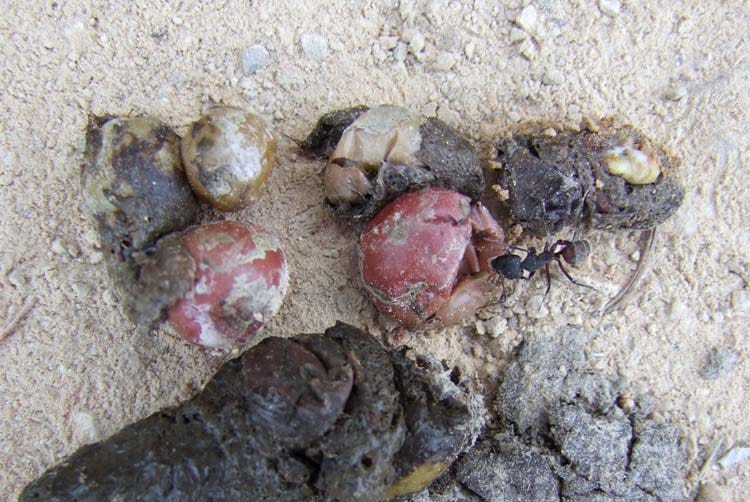
Bird dropping, grapes and antWe all know birds are a nightmare for growers, like roe deers and wild boars, and this picture is like a crime scene, we spotted this bird dropping while hiking a remote trail in the wilderness overlooking a valley in the Var (Provence) where many vineyards were planted. The jays are prime suspects here, they love prey on fruits and grapes, and this one had possibly eaten too many grapes as some weren't fully digested when it made a toilet stop up in the hill. But nothing is lots with Mother Nature and this large (but peaceful) Provence ant was already having a plan for these grapes....
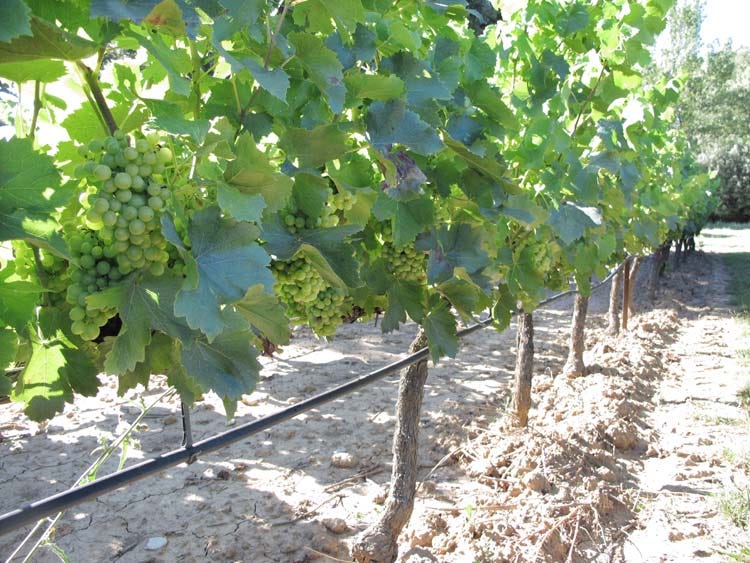
Irrigation in ProvenceIrrigation seems to progress in France, I shot this picture a few weeks ago in the Var département near Brignoles, not far from a large winery named Chateau de L'Escarelle. I had noticed while driving along these vines that the ground seemed still wet in the middle of the day although the last rain storm dated from a few days back. I know the rosés of the region sell well and I guess there's some temptation among growers to push the yields a little more.
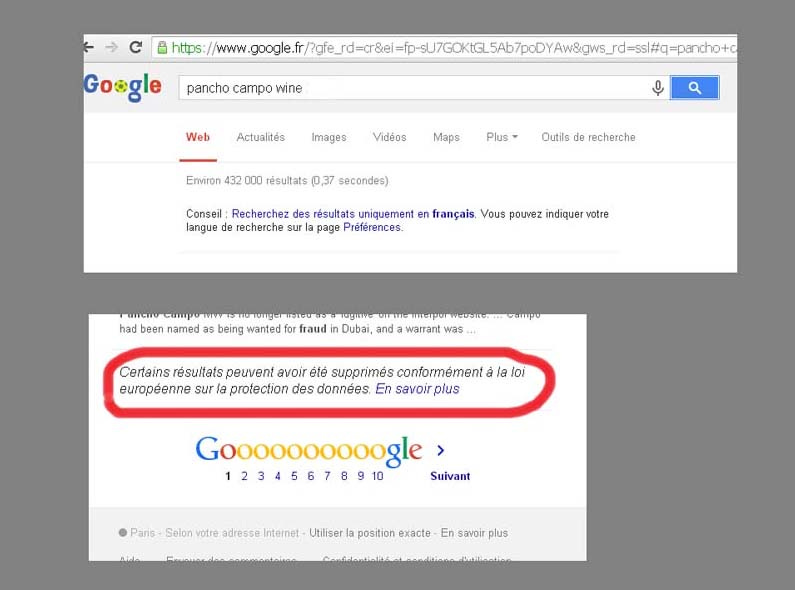
A helpful reminder about Europe's censorshipThat's it, Google has been folllowing the directives of our beloved European Union censors and since thursday june 26 is removing search results in Europe when incrimated individuals ask fo it. Make yourself a try if you're in Europe : just type any thing, you'll notice the fine print at the bottom of the Google page telling you that some results may have been scrapped to be in line with the EC law. Because of these words you can't trust the results of Google anymore, they may or may not have been affected by censorship.
Now if you're in Europe, just make a try and use a proxy server based in the United States (like http://www.unblockreal.info/ for example) and with the same search words you'll have the original, uncensored version of the web search (without the fine print hinting at the forced censorship). From now on if you're doing serious research on the web, learn to do it like these poor folks longing for freedom in Saudi Arabia or China, use a US based proxy.
And what if they had been drinking booze on top of this ?
Dancers sentenced 91 lashes and jail time
Amid terrible news from the Middle East, this video let us envision some hope, there are youths over there who long for fun, music and certainly social drinking, and these folks aren't shy of taking risks for that. These young Iranians shot this video (some sort of Tehran version of Pharrell Williams' "Happy") in a private home months ago and one of them posted it on Youtube to the delight of everyone in the world. They were subsequently all arrested last may, got interrogated and pushed to make Mao-era-style confession and apologize on TV. Lastly, they were recently sentenced to jail time and 91 lashes. But in regard to what it's happening elsewhere with the devout elements of this culture, Iran can probably be considered as very moderate...
Forbidden in France
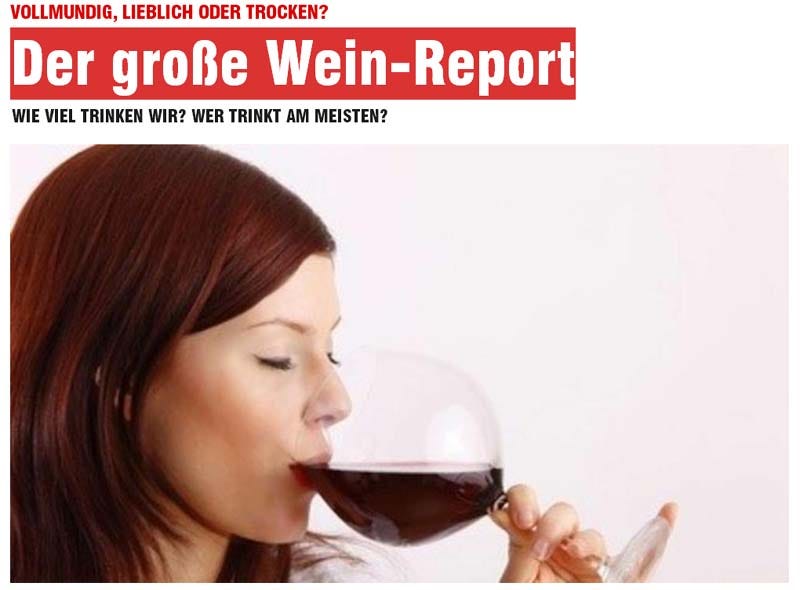
I couldn’t but contemplate this picture with introspective thoughts the other day as our own ayatollas have edicted a law years ago to ban these images. This innocuous picture illustrating an article in the German tabloid Bild (Wein Report) would be impossible to print in a French newspaper... This is because it’s been almost 25 years (1991) that the French have let a stupid law (named Loi Evin) in place which prohibits positive and evocative images featuring people interacting with wine, and this not only in advertising but also in newspapers articles. The fonctionnaires of the modesty police (to refer to their Saudi equivalent) watch for breaches in the media and on billboards, and the culprits are prosecuted and heavily fined. Even an innocuous article, a bad wording or a picture a bit too joyful can make a newspaper loose tons of money, the judges may be quite soft on crime but there are exceptions, here mysteriously they can inflict harsh fines, like a few years ago (2008) to the daily newspaper Le Parisien for an article that was deemed too enthusiast regarding the consumption and joy of Champagne (story by Decanter). Since that court decision the media lay low and wait, avoiding any evocative article to avoid the wrath of our judges who seem in need to compensate for their softness elsewhere.
Yet, after the law passed it soon was obvious that it was counterproductive in a country with long tradition in the production of wine and spirits, but the law was never repealed. Usually when you have a leak in your bathroom or when your business faces a hindering problem you swiftly do the right thing to correct the fault but our rulers aren’t too much bothered by the nuisance...
Great pictures of artisan vignerons
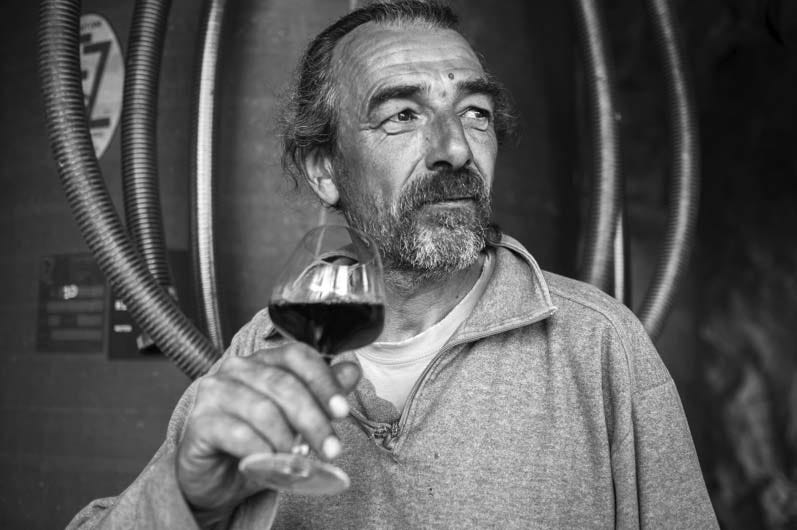
Kudos to fellow photographer Jean-Yves Bardin who has a nice collection of portraits of vingerons you have probably heard of and tasted their wines. I fell upon his page here for the black & white portraits while doing some internet research one day, and later discovered his color portraits page, nice work, the pictures tell their story.
Click on the sidebar on his page, there are other themes including the cellars and the vineyard.
Jean-Yves Bardin published a book with his portraits of vignerons of Anjou, you can order it through the Amazon page.
What when EU wine will be boycotted ?
With the new Russian counter-measures to respond to the European sanctions over Ukraine, the cost appears to be costly for the European farmers as dairy products and vegetables from Europe are banned from Russia. This first-ever tomato fight in Holland has been organised in Amsterdam to protest against the situation which closes the doors to important imports to Russia and puts a burden on the agriculture sector including in France. The risk that few are considering here is also that Russia could look elsewhere and never come back as other countries with a vibrant agriculture sector position themselves to take Europe’s place, Israel is for example expanding its agricultural ties with Russia. Turkey and Morocco are also in good position for that. Russia and Israel are getting closer on that issue according to this Russian news article.
The reason for posting this video and pointing to this issue is that while French wine is not targeted yet from what I know (and neither spanish, Italian or German wines), I wonder if the producers could organize a similar event, maybe not with throwing bottles at each other but why not literally drowning a joyous crowd under hectoliters of boycotted wine. If they managed to use for that purpose a reasonably-drinkable wine, it could have positive effect on the general mood...
Still-life scene in Burgundy
This video is for those who haven't enjoyed the quietness of the countryside in summer. Through this still scene, these well-fed meat cows from Burgundy help us relativize all our sorrows and vain pursuits : just take the time to watch them, there's little action here and you'll get a sample of the sense of a sense of peace and serenity that country living can give you if you know how top appreciate it. I noticed by the way that many people living in the countryside nowadays aren't senisitive to the charm of their environment and seem to run to the nearest mall and supermarket as soon as they have free time.
Permalink